
A sentence that needs a longer story.
When someone has very little room left to maneuver, the promise that they are not alone can carry an enormous weight.
Across conversations with people facing difficult periods in their lives, I have noticed how often God enters the account of what comes next. Financial strain, uncertainty, a problem that will not resolve: somewhere in the telling, there is the hope that help is still possible. God is there. There is a way through. Tomorrow has not been entirely closed off.
That observation brought me to the sentence in this title: God is for the poor. It is a provocation I want to examine. Poverty describes a material condition. Faith belongs to people across incomes, and its meaning cannot be read from a bank balance. What caught my attention was the particular weight it seemed to carry when the practical options were narrowing.
A person with savings can imagine a bad month ending without everything falling apart. Someone without that cushion may have to hold the same uncertainty with much less protection. Hope then does more than make the future pleasant to contemplate. It can make the next day bearable enough to enter.
I am interested in that hope with respect. A belief that someone is watching over you may offer strength, continuity, or a sense that your life still matters when circumstances suggest otherwise. Before judging it from a distance, I want to understand what the belief is helping a person carry.
There is another part of the observation, though. People with money and influence can speak the language of faith too. Sometimes they speak from conviction. Sometimes that language helps them become familiar and trusted to people for whom religion is a refuge. Those possibilities can overlap. The same sacred words can enter a private struggle and a public performance.
This week’s story follows that change of position: from needing hope, to sharing it, to being able to draw authority from it. The question is what happens to the person seeking help as faith moves through those different arrangements.
What money can place between you and a crisis.
Think of financial security as a little distance between a problem and its consequences. A delayed payment might be an inconvenience if there is money in reserve. Without it, the delay can become a chain of other decisions: what can wait, whom to ask, which promise to postpone. The amount of the payment may be the same. The space around it is different.
These are general examples, not scenes from a particular conversation. They help explain why I hesitate to compare people’s responses to hardship without comparing their options. One person can buy time. Another has to find a way to endure the time they cannot buy.
There is a sociological idea close to this intuition. Pippa Norris and Ronald Inglehart’s theory of existential security connects religious life to people’s exposure to risks and their sense that survival is secure. It offers an account of why religion may retain greater importance under insecurity. The theory is debated; it is an explanation to examine, rather than a law governing every believer. [1]
A historical survey makes the association visible. In Gallup’s 2009 World Poll, the median country percentage describing religion as important in daily life was 95% in the lowest national-income band and 47% in the highest. [2]
Religion’s importance across national income groups
HISTORICAL SNAPSHOT · GALLUP WORLD POLL, 2009Inspect the numbers
| National income group | Median country share |
|---|---|
| Countries with per-capita income ≤ $2,000 | 95% |
| Countries with per-capita income > $25,000 | 47% |
The graph describes countries. It cannot establish that a particular person’s hardship produced their faith. A society brings many things into a survey response: family traditions, institutions, history, social expectations, and individual conviction. Moving from an average national income to a claim about someone’s private reason for praying would skip most of that story.
Still, the pattern gives my observation a question worth pursuing. What role might faith play where people feel exposed, and where the help they need seems uncertain? We should be able to ask that without reducing a religious life to an emergency response.
A belief can begin in childhood, be sustained by community, and become especially consequential during a crisis. The crisis need not create it. It may bring an existing relationship, practice, or promise into the center of the day. What was always there becomes something a person leans on.
The difference I want to follow is therefore a difference in reliance. When ordinary protections are thin, hope may be asked to carry more. That tells us something about the surrounding conditions as well as the belief.
A future that remains open.
Financial trouble is partly a problem of numbers. It can also become a problem of time. The mind keeps returning to what is due, what might go wrong, and what has already failed. The future can start to feel like a repetition of the same difficulty, with fewer exits each time.
The hope that God will help can interrupt that feeling. For a believer, the outcome is not entirely exhausted by what they can currently see. There may be meaning in continuing, someone to address, or a reason to try again. I am describing a possible role of faith here, not promising that belief will change a financial outcome.
We often discuss hope as though it has to supply a prediction. But a person may need it to supply endurance. Getting through a difficult afternoon, making another attempt, accepting help, or retaining a sense of worth can matter before the larger problem has been solved. The significance of those acts is easy to overlook from a comfortable position.
Research on religious coping helps keep the account specific. Kenneth Pargament and colleagues distinguished supportive forms of coping—such as seeking spiritual support and understanding oneself as working with God—from forms involving spiritual discontent or interpreting adversity as divine punishment. Their study examined people facing major stressors; it did not test a claim that religion solves poverty. [3]
That distinction stops me from treating religious hope as a single experience. A belief that I am supported through a difficult period may feel very different from a belief that the difficulty proves I have been condemned. We would need to listen to the person to know what their faith is doing in that situation.
There is also a practical distinction between hoping for help and ceasing to seek it. Prayer can accompany an application, a conversation, collective action, or assistance from other people. Whether it supports action or replaces it is a question about the particular setting. The word “faith” by itself does not settle it.
This matters for the way we speak about people under pressure. Someone turning to God is still making decisions, recognizing obligations, and trying to navigate a life. Their reliance on a source of hope does not make them a passive character in somebody else’s theory.
What I would want to ask is simple enough: does this hope help the person remain connected to the world and able to act within it? And are the people offering that hope also willing to help with the conditions making life so hard?
A cushion cannot answer every question.
It would be easy to extend the title into a neat division: people with fewer resources need God, while people with more resources need only themselves. The lives on either side of that sentence are much more varied. A wealthy person may believe deeply. A person living with very little may have no religious belief at all.
Money can change the consequences of losing a job, encountering an unexpected expense, or needing assistance. It cannot guarantee an answer to grief, mortality, guilt, loneliness, or the question of what a life is for. Financial protection and the need for meaning can coexist.
More recent survey evidence also complicates the simple division. Pew’s 2025 report describes a broad relationship between national prosperity and religion’s personal importance, while noting variation among affluent societies. The following four examples put some of that variation in view. [4]
Religion’s importance in four selected countries
ADULTS SAYING RELIGION IS VERY IMPORTANTInspect the numbers
| Country | Adult share |
|---|---|
| India | 82% |
| Singapore | 45% |
| United States | 38% |
| Sweden | 7% |
The difference between Singapore, the United States, and Sweden should keep us from treating prosperity as a switch that turns religion off. These examples are national estimates; they do not identify how the richest residents think. They also cannot tell us whether someone is sincere, seeking comfort, following a tradition, or signaling belonging.
That last limitation is especially important to the second part of my observation. We cannot infer that an affluent person is using religion strategically simply because they are affluent. The fact that they have fewer immediate financial worries tells us something about their resources. It gives us no direct access to their convictions.
What we can examine is the public role of a religious expression. Who hears it? What relationship does it create? What commitments accompany it? Does it help someone become credible to a community, and what do they do with that credibility?
Those questions allow room for mixed motives. A person may believe, feel a genuine obligation to others, enjoy recognition, and understand the influence their language carries. The task is to follow the relationship that develops, rather than declare the contents of someone’s inner life.
The prayer enters the public square.
A private appeal to God asks for help with something the speaker cannot fully control. A public invocation can also tell listeners something about the speaker: where they belong, what they recognize as sacred, which community they want to address. The words have an audience now.
That change of scale is the part of the story I find most unsettling. Someone who has learned to hear religious language as a promise of care may encounter it from a person seeking support. The language can make distance feel smaller. The speaker may seem familiar before the listener has had much opportunity to examine their conduct.

This is one way religious belonging can become useful to people with influence. A familiar ritual, a shared reference, or an appearance at a religious gathering can make a leader recognizable as someone close to the community. Recognition may become trust. Trust may become political support, social standing, or access. This is a possible mechanism, not a claim about every religious appearance.
There is empirical work on a narrower version of the mechanism. Christopher Weber and Matthew Thornton tested religious cues in campaign advertisements in a US survey experiment. They found that the cues could activate religious traditionalism in judgments of candidates, with effects reduced when additional candidate information was available. [5]
Other research limits how far the story can go. Elizabeth Simas and Adam Ozer’s 2017 experiment found that religious cues conveyed information about abortion positions, but did relatively little to distinguish overall ideology once party was considered. The cue’s meaning depended on what else the listener knew. [6]
Neither study proves that wealthy people privately disbelieve, or that people facing hardship are unusually easy to manipulate. Both concern particular political judgments in a US setting. They support a more limited point: religious information can enter the way a public figure is understood, and it operates alongside other information.
For the essay, the ethical question begins after that recognition. If a public figure borrows the language through which people express their deepest hopes, what responsibility follows? Familiarity is powerful. It should make their commitments easier to examine, rather than place them beyond examination.
I would look at the connection between words and conduct. Does the person using the language of care support practical help? Can the community question them? Are people outside the religious group treated with dignity? When shared belief is offered as a reason for trust, the effects of that trust remain open to judgment.
It is possible for genuine faith and public ambition to coexist. The important question is what the relationship enables. Someone’s hope should not become a resource that another person can draw on indefinitely without an obligation to the people who supplied it.
The heart in a heartless world.
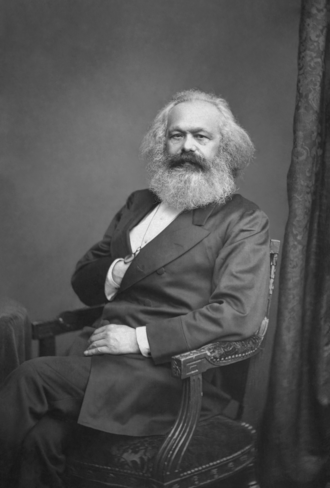
There is an older sentence hovering behind this discussion. Marx’s description of religion as the “opium of the people” is often recalled on its own. In the same passage, he calls it the “sigh of the oppressed creature” and the “heart of a heartless world.” He treats religious suffering as both an expression of real suffering and a protest against it. [7]
Marx’s argument ultimately calls for changing the conditions that make consolation necessary, as part of a broader critique of religion. I do not need to adopt that entire position to find the sequence revealing. The comfort appears in relation to a world that needs examining. Taking away a person’s consolation would not, by itself, make that world kinder.
That is why I am reluctant to begin with an attack on the hope. Someone whose day is held together by belief may have a clear account of what is wrong around them. They may know exactly which payment is missing, which opportunity was denied, or which promise was broken. Hoping for help does not mean they have failed to notice the problem.
The sharper question is what happens when those able to change a condition offer reassurance in place of changing it. Imagine someone with authority asking a struggling community to keep believing while avoiding scrutiny of decisions within their own control. The example is hypothetical. The imbalance is the thing to examine: one side supplies trust, while the other determines how much practical help follows.
Patience can be an act a person chooses. It becomes a different relationship when someone benefits from instructing others to remain patient. A promise of eventual relief may then make an arrangement easier to maintain. The religious vocabulary alone cannot tell us whether that is happening; we have to inspect the arrangement.
The same scrutiny belongs to secular promises. Progress, prosperity, and a better tomorrow can also be invoked while present obligations remain unmet. Religion is one particularly intimate language in which hope and authority can meet. The problem is what someone does with another person’s willingness to trust.
In that sense, the title opens onto a question about power. If God is a refuge for a person without much protection, how should we evaluate the people who present themselves as speaking for that refuge? The answer should include what happens to the person’s life here, in the world where the difficulty is being lived.
Faith can bring help into the room.
There is another direction the story can take. A religious community can make the hope tangible. Someone comes with food, notices an absence, contributes money, gives time, or helps a person reach another source of support. The belief is carried through a relationship and an action.
One concrete example is langar, the free community kitchen associated with Sikh gurdwaras. The SGPC’s account of the gurdwara describes this shared provision of food as a feature of religious communal life. It makes a simple point for this essay: spiritual belonging can include a material response to need. [8]
A meal does not resolve every condition producing hunger. But a person eating it is receiving something more immediate than a promise. We can value that help and still ask about access, scale, and the wider conditions. Practical care and questions about justice belong in the same conversation.
Religion can also be a language for making demands of power. At the 1957 Prayer Pilgrimage for Freedom, Martin Luther King Jr.’s address, “Give Us the Ballot,” pressed the president and Congress on voting rights. The religious gathering was a setting for a concrete political demand. [9]
That example matters because it interrupts the picture of belief as an instruction to endure quietly. A community gathered in faith can organize, articulate an injustice, and ask for change. The political presence of religion can support people challenging an arrangement as well as people maintaining one.
The contrast is therefore less useful as a division between classes of people than as a question about the direction of a relationship. Does an institution convert people’s trust into protection for its own authority? Does it use the trust to organize care and strengthen the community’s ability to speak?
The same institution may do different things at different times. Its work needs to be examined in practice. The presence of a sacred symbol establishes very little about whether food arrived, a promise was kept, or a person was heard.
This brings me back to the conversations that prompted the essay. If someone is holding onto the belief that God will help, perhaps the people around them can ask what help they themselves are able to offer. The hope need not be left to carry the entire burden alone.
What do we ask of someone else’s hope?
I began with people navigating difficult lives and the place God seemed to occupy in their account of getting through. The sentence in the title came from noticing that reliance. Writing it out has made me more attentive to the conditions around the belief: the resources available, the relationships it sustains, and the people who can turn it into public authority.
Financial security changes how much of a crisis someone has to carry without a cushion. It can change how urgently they look for reassurance, but it does not sort people cleanly into believers and unbelievers. Faith can offer meaning across circumstances. Hardship can make some of its promises especially consequential.
People with influence can recognize that consequence. They may respond with genuine care, draw on shared belonging, or seek advantage through the credibility of religious language. We cannot read their motives from the language alone. We can ask what they do, whom they help, and whether their authority remains accountable.
That is where I want the sharper edge of this essay to land: on the obligations of those able to act. If someone else’s faith helps you win their trust, their hardship should remain visible after you have won it. The familiar words cannot be the whole relationship.
I would not want a person to have to choose between preserving their faith and asking for a fairer life. They should be able to pray, to seek assistance, to challenge a broken promise, and to expect institutions to do their work. Hope can live alongside a demand for something concrete.
Perhaps the most difficult question raised by “God is for the poor” is what the rest of us are for. When a person is holding onto hope because their options feel narrow, do we give that hope something to work with? Do we show up with care? Do we examine the conditions? Do we keep the person’s dignity at the center of the story?
A promise that tomorrow remains possible can help someone continue. The people who hear that promise still have today in which to do something.
A different reading or a correction? Send a thought ↗
Keep the observation open to evidence.
Research checked October 12, 2026. This essay begins with a personal observation across conversations, not a representative sample. Survey findings, historical arguments, and the author’s interpretation are identified separately. Illustrative situations are general examples, not accounts of identifiable people.
- Pippa Norris & Ronald Inglehart · 2004 / 2011
Sacred and Secular: Religion and Politics Worldwide ↗The existential-security framework; publisher record for the second edition. A debated explanation of cross-societal patterns, not a diagnosis of individual belief. - Steve Crabtree · Gallup · 2010
Religiosity Highest in World’s Poorest Nations ↗2009 surveys in 114 countries. The first chart reproduces reported country medians in the lowest and highest national-income bands. - Kenneth I. Pargament and colleagues · 1998
Patterns of positive and negative religious coping with major life stressors ↗University research record and abstract, with DOI 10.2307/1388152. Distinguishes coping patterns; does not establish that faith resolves financial hardship. - Jonathan Evans and colleagues · Pew Research Center · 2025
Believing in Spirits and Life After Death Is Common Around the World ↗The second chart uses national adult estimates. Inspect Q23, pages 2–3 ↗ and survey methods ↗. Selected examples are not a class-level causal comparison. - Christopher Weber & Matthew Thornton · 2012
Courting Christians: How Political Candidates Prime Religious Considerations in Campaign Ads ↗The Journal of Politics 74(2), 400–413. US experiment on religious cues and candidate evaluations; does not measure elite sincerity or poverty. - Elizabeth N. Simas & Adam L. Ozer · 2017
Church or state? Reassessing how religion shapes impressions of candidate positions ↗Research & Politics. Experiment examining religious and party cues; qualifies the reach of religious signals about overall ideology. - Karl Marx · 1844
A Contribution to the Critique of Hegel’s Philosophy of Right: Introduction ↗The original argument, including the passage on consolation, suffering, and protest. A theoretical critique, not a survey finding. - Shiromani Gurdwara Parbandhak Committee
Gurdwara ↗The institution’s account of gurdwara life and langar, the free community kitchen. A concrete example of religious communal provision. - Martin Luther King Jr. · May 17, 1957
Give Us the Ballot, address at the Prayer Pilgrimage for Freedom ↗Speech text and editorial context from the King Institute at Stanford. An example of a religious gathering supporting a demand for political rights.
Image credits & how the visuals were made
The cover and the public-language illustration were made with the built-in ImageGen tool. They are conceptual images, not documentary evidence. The graphs are original HTML/CSS renderings of the cited survey estimates on common zero-based scales. Neither graph measures a person’s motives. Generation prompts and credits ↗
The Marx portrait is John Jabez Edwin Mayall’s 1875 photograph, restored, public domain. Original portrait credit ↗
Keep the person in the picture.
Take the question with you. Share it with someone curious.